DECAGONATOR / Engineering Journal
Every build has a story.
This is the record of our rookie FTC journey—from our first aluminum frame to an integrated robot. We document what we built, what challenged us, what we changed, and how each lesson moved the team forward.
Explore our latest progress ↓09moments documented
04journey chapters
01robot growing every session
Entry 04 · Current milestone
From loose parts to an integrated chassis.
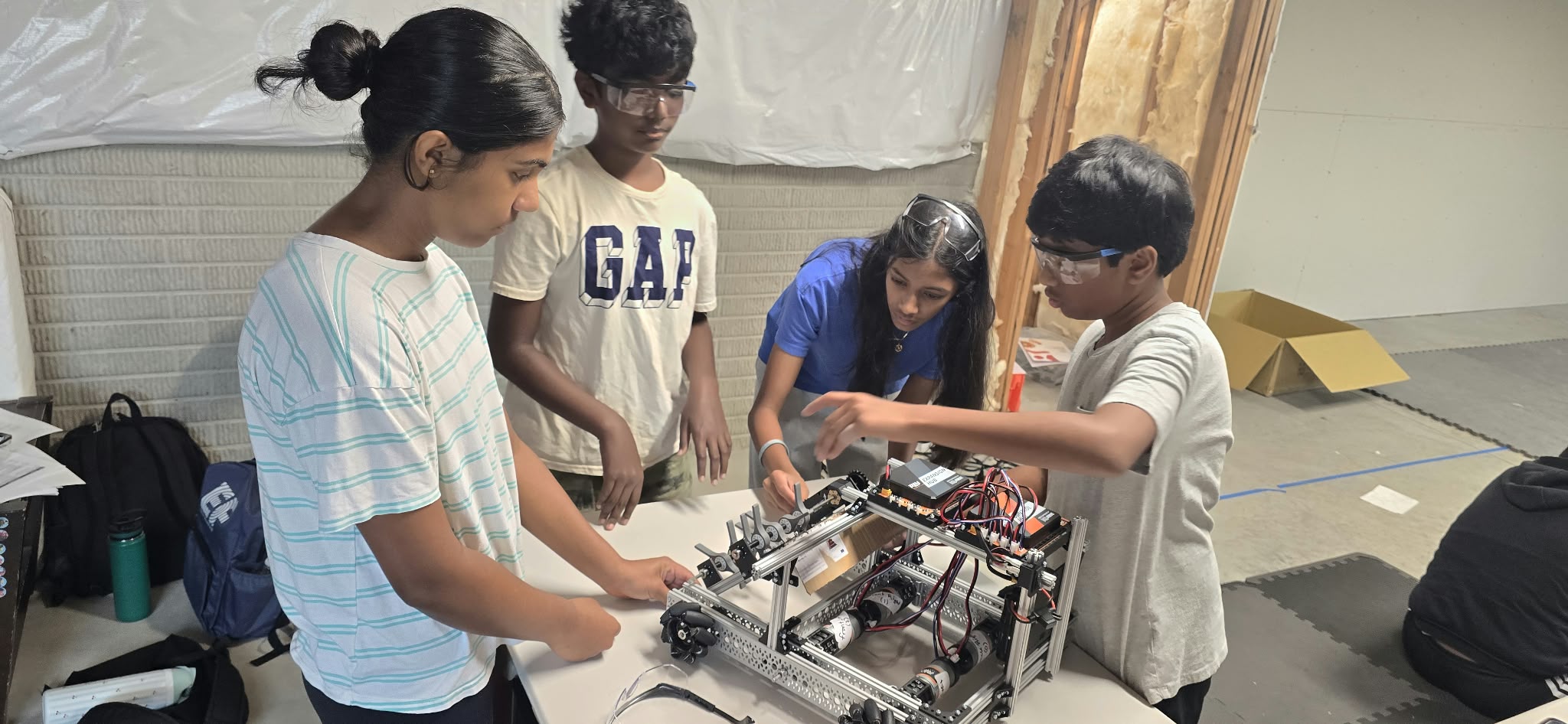
Our robot is no longer just a collection of individual parts. We brought the drivetrain, electronics, wiring, frame, and early mechanisms together into one working platform.
This milestone taught us that integration is where engineering gets real. Every bracket affects another component, every wire needs a safe route, and every mechanism must remain accessible for testing and repair.
What we learned
Build for reliability and serviceability—not only for the first successful test.
Build for reliability and serviceability—not only for the first successful test.
Entry 03 · Build, test, improve
Our first design is never our final design.
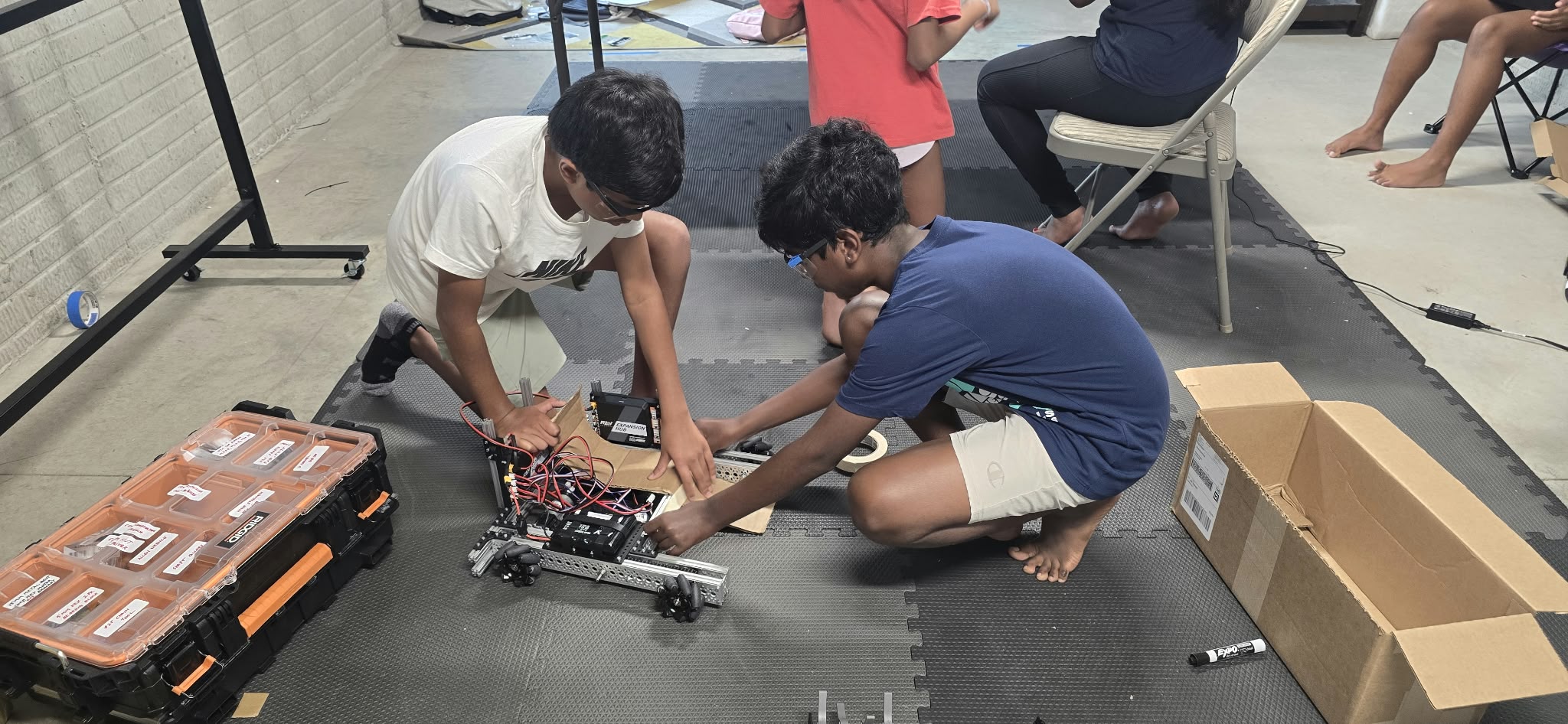
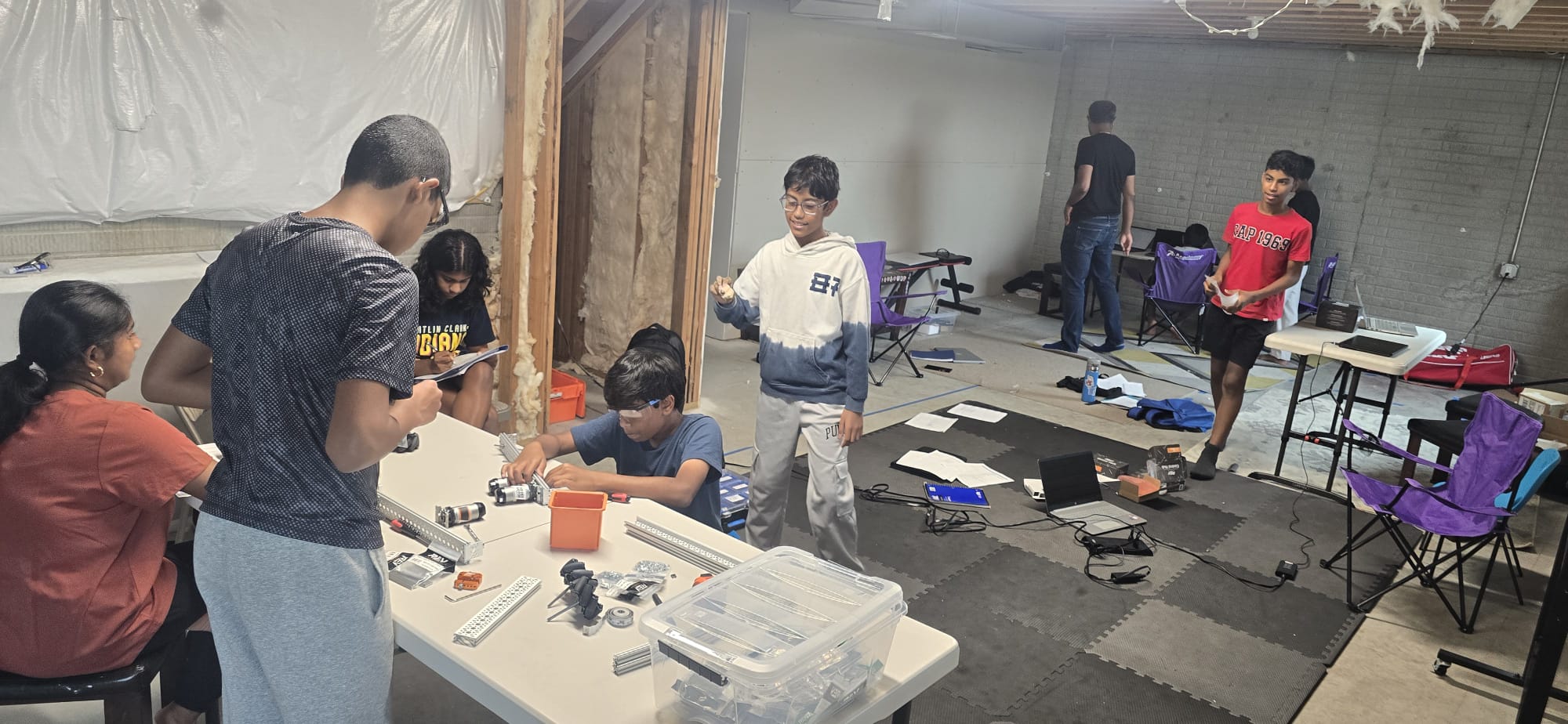
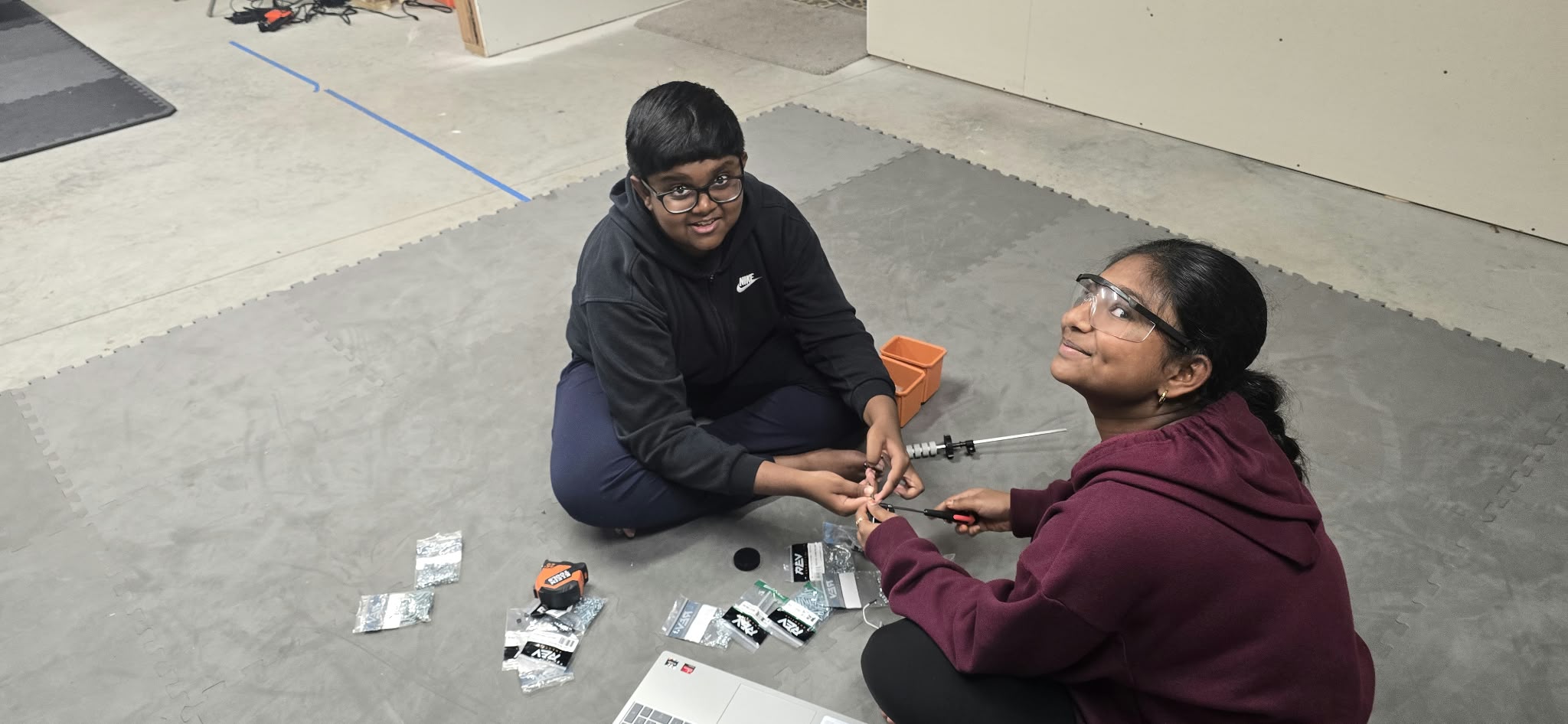
We learned to prototype before committing to a permanent mechanism. Cardboard, temporary supports, loose positioning, measurements, and quick fit checks helped us answer important questions early.
Instead of hiding failed attempts, we treat them as evidence. A part that does not align, a mechanism that binds, or a layout that is hard to service gives us the information needed for the next version.
What we learned
A prototype does not need to look perfect. It needs to teach us something useful.
A prototype does not need to look perfect. It needs to teach us something useful.
Entry 02 · Programming foundation
Before autonomous motion comes disciplined code.
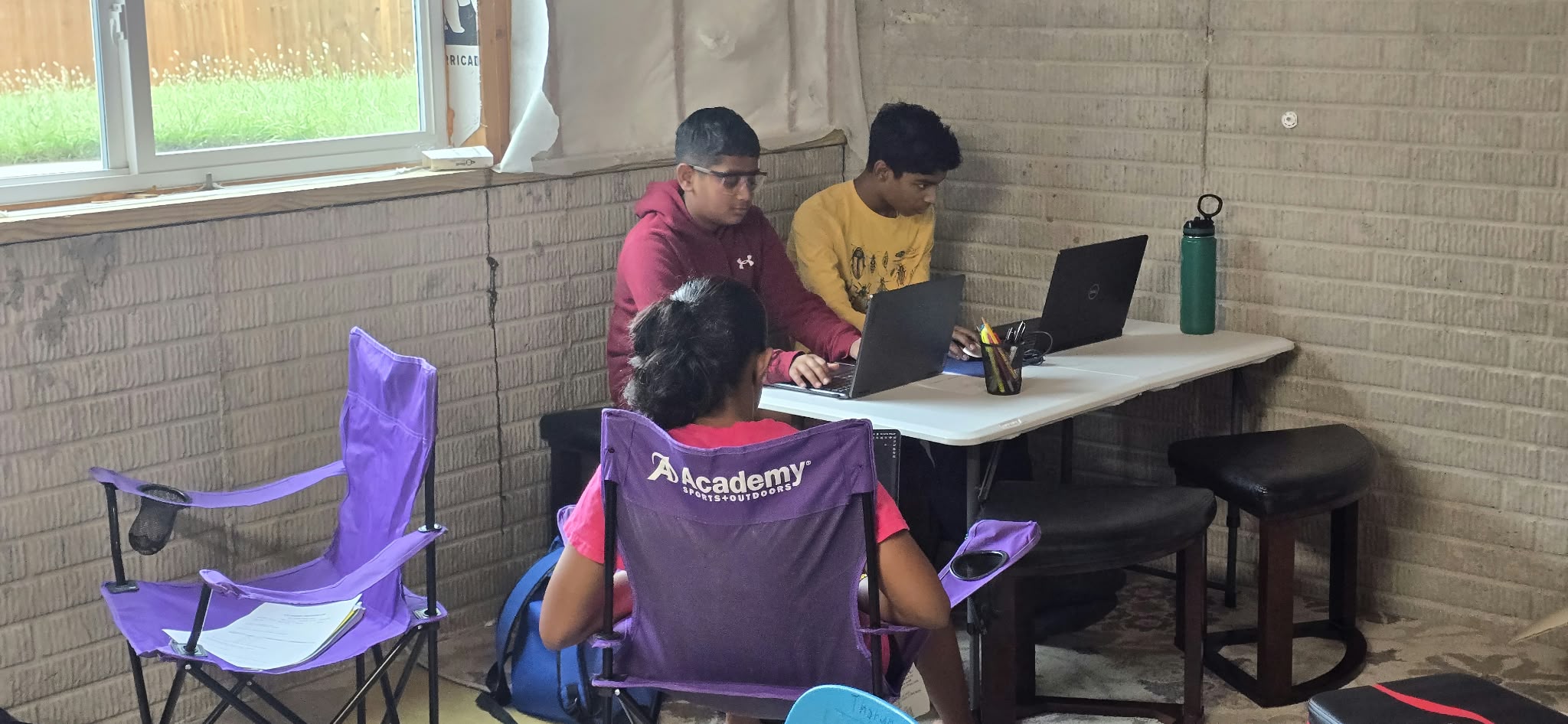
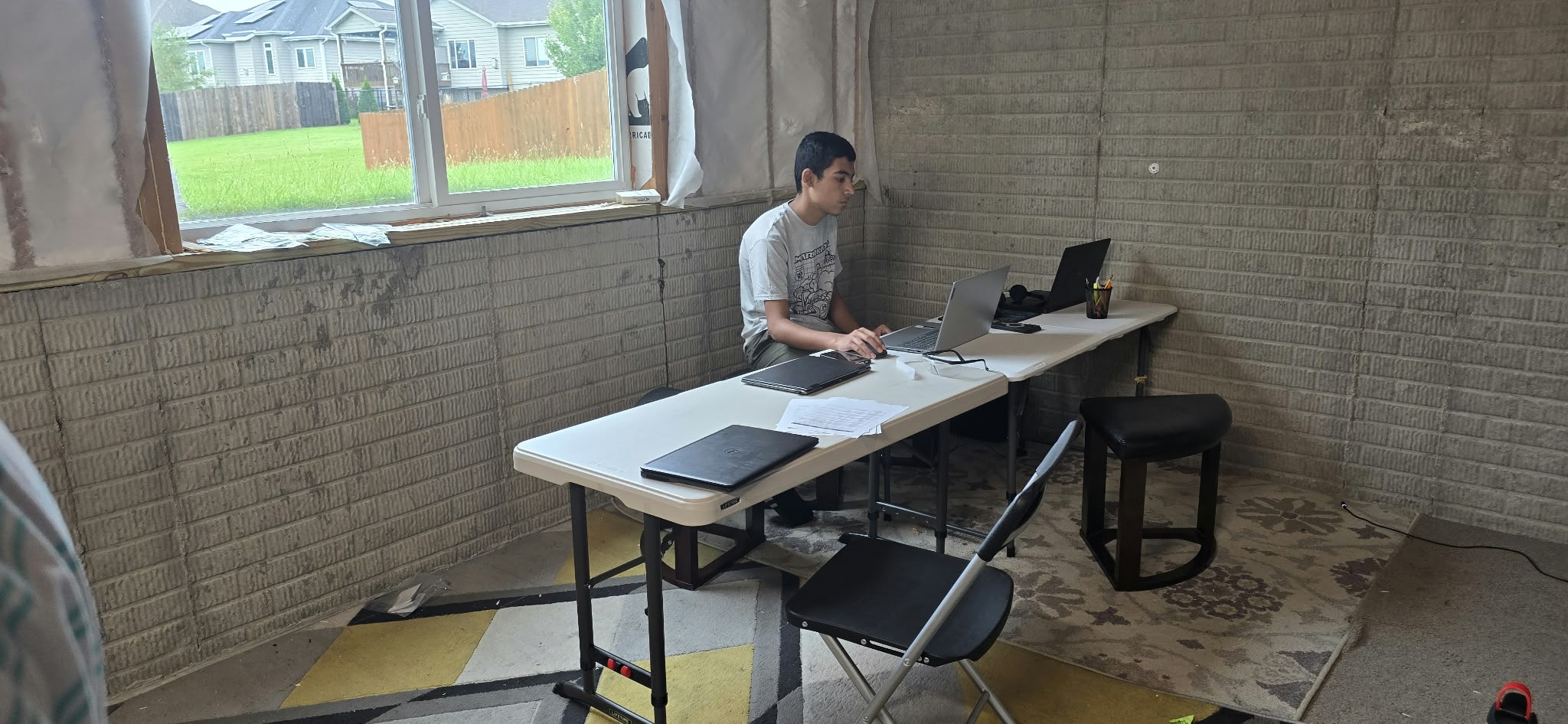
Our programming journey began with the fundamentals: setting up the development environment, understanding the FTC SDK, using Git and GitHub, creating branches, and learning how code reaches the robot.
We are building habits that will matter later—small changes, readable code, meaningful commits, peer review, and testing one behavior at a time. The goal is not only to make the robot move; it is to understand why it moved and to reproduce that result reliably.
What we learned
Reliable autonomous code starts with a reliable development process.
Reliable autonomous code starts with a reliable development process.
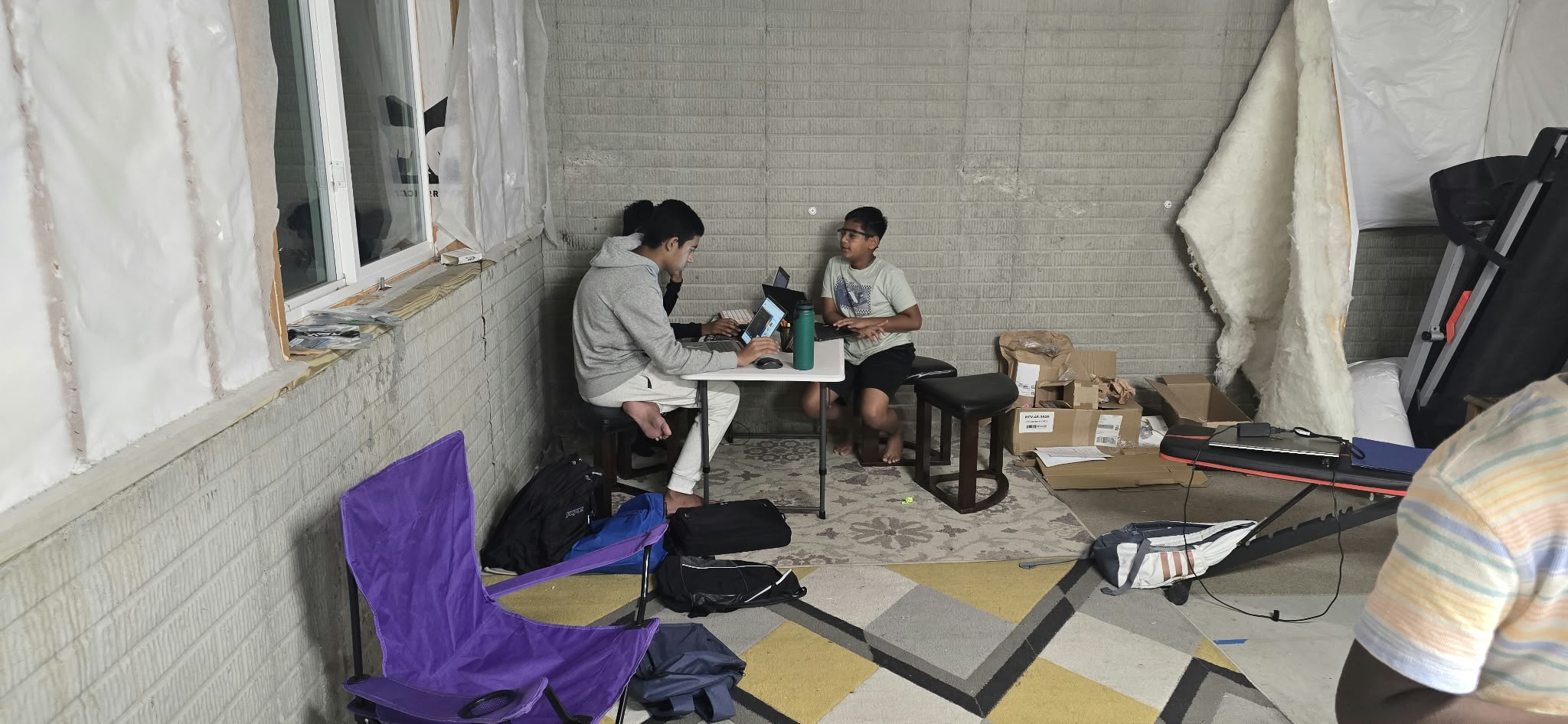
Entry 01 · Where it began
Our first frame. Our first shared success.
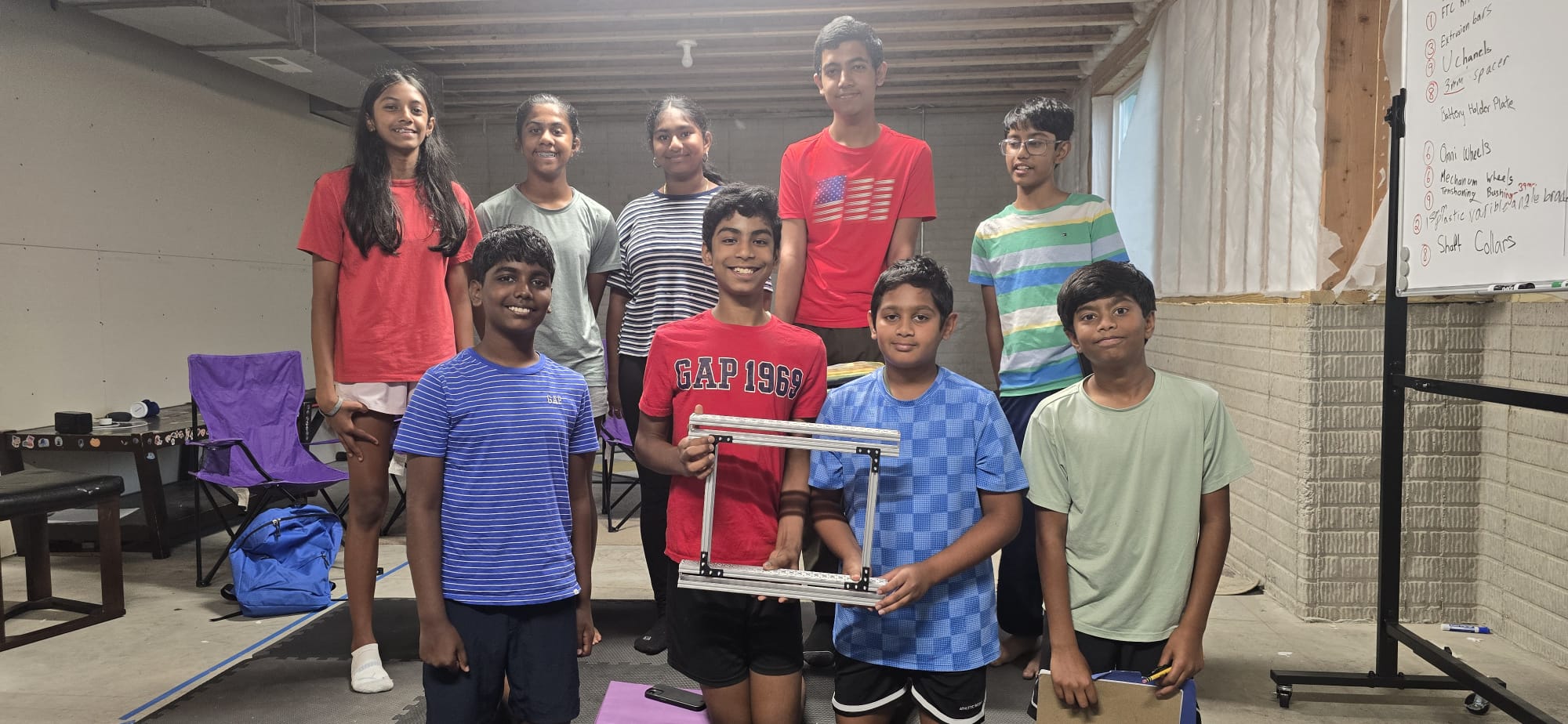
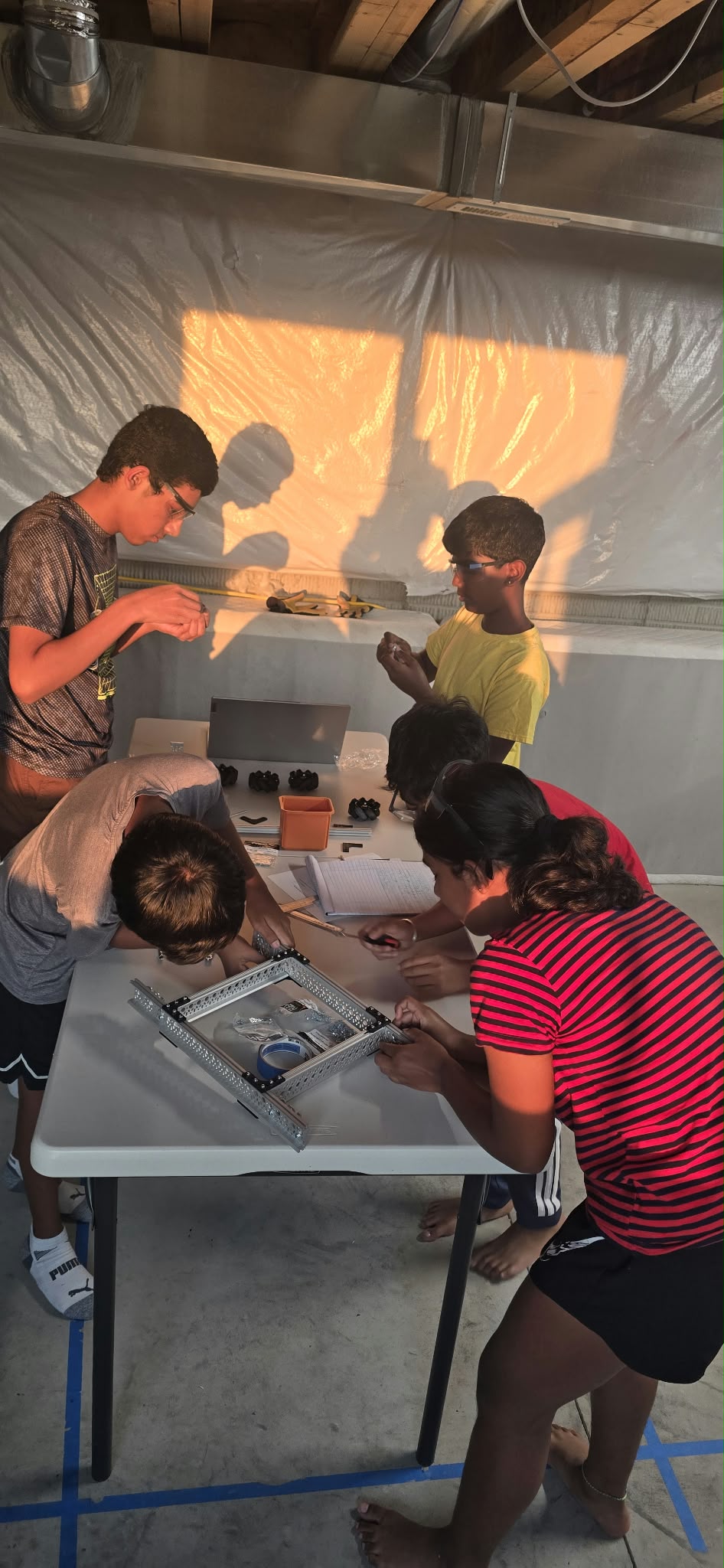
Our first major build milestone was simple but meaningful: creating a square, stable aluminum frame together. It gave us our first real look at how measurements, fasteners, alignment, and teamwork affect a robot.
More importantly, this was the moment the project became ours. We could hold something we had planned and assembled together—and imagine all the systems that would eventually grow from it.
What we learned
Big robots begin with small, accurate, shared steps.
Big robots begin with small, accurate, shared steps.
The story continues
Next: test it under pressure.
Our next chapters will capture mechanism testing, autonomous development, driver practice, competition preparation, failures, fixes, and every hard-earned improvement along the way.